
To live without a car in Morocco, choose an address that fits your regular journeys, services on foot and return times. Check the complete route and budget for occasional travel. This depends on the location and your household; it does not assume every city has the same transport coverage.
You might want to avoid car expenses, drive rarely or simply prefer walking. That choice deserves preparation without being presented as an obligation. A nearby stop helps with some journeys, but your week also includes shopping, family and unexpected appointments.
Map your week before choosing an address
Write down regular and occasional destinations and who needs to travel. Include times, bags or equipment and mobility constraints. Distinguish a trip you can manage alone from one that must work for the whole household.
If you are still comparing areas, choosing a neighborhood helps establish priorities. Then use the work commute guide for that particular route. Here the question is broader: can you organize your week without depending on a personal car?
Check what the network actually allows
In Casablanca, the official Casatramway and Casabusway lines and timetables describe the services concerned. In Rabat-Salé, the operator’s map helps locate stops. These examples do not establish coverage for an address in another city.
The Rabat-Salé map below helps you prepare possible connections. Then walk to the stop and check useful times with the operator. A map alone does not give door-to-door duration, pushchair access or the availability of another mode. Sources checked on 10 October 2026; check again before deciding.
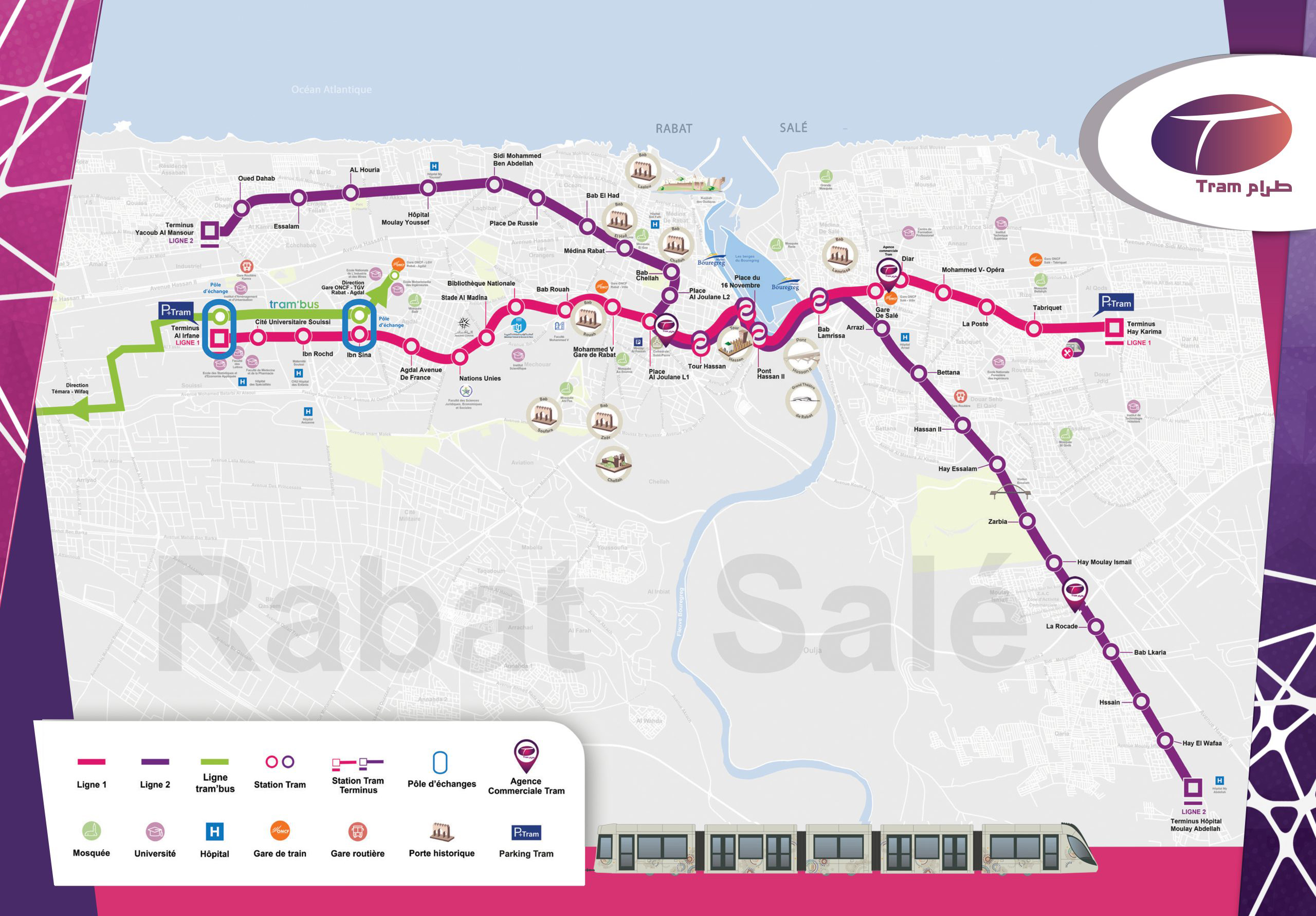
Map checked on 10 October 2026. Labels retain the source language; check timetables and access from your address. A line does not guarantee your journey time.
Test the small trips that matter
During your visit, try part of your shopping routine and locate an essential service. Returning with bags can change how you feel about the distance. Examine crossings and steps for your needs rather than judging access by metres alone.
For an early appointment or late return, check the relevant first or last service in the correct direction. A departure time at the terminus is not a passing time at your stop. If the route does not work, consider another address, a different time when possible, or occasional transport with a cost still to confirm.
| Situation | Main option to test | Alternative to prepare |
|---|---|---|
| Work or study | Walking and transport at the right times | Another confirmed route |
| Shopping | Shops accessible carrying bags | Delivery if available, with known price |
| Late return | Last service in the correct direction | Occasional transport to confirm |
| Household appointments | Access suitable for the people travelling | Assistance or another mode |
| Exceptional journey | Dedicated budget and arrangements | Booking if necessary |
Make a budget that includes exceptions
Count the tickets or passes needed, connections under the applicable rules and occasional transport. Do not assume automatic savings: compare your real spending with your own circumstances, not a national cost of owning a car.
Set aside money for exceptions without inventing fares. The rental budget guide separates move-in cash from regular expenses. If an address frequently requires expensive alternatives, its lower rent may not suit your overall budget.
Our preference is a plan that works on ordinary days with a realistic fallback. You can choose a car, shared use or a combination of modes if that better serves your needs. The aim is to choose your home knowing the implications.
Clarify details with the owner
Ask about exact access, nearby services and what the home actually includes. An owner can provide these details without promising transport coverage or journey time. The neighborhood visit guide helps you check for yourself.
Can your routine work without a car?
- Everyone’s destinations considered
- Walking and transport tested
- Unusual return times checked
- Occasional alternatives budgeted
- Address fits essential needs
BienLibre presents direct owner-to-renter contact to help protect your budget, with a property catalogue still to come. This approach does not guarantee access. Once you have chosen your home, use the moving calendar to prepare your arrival.